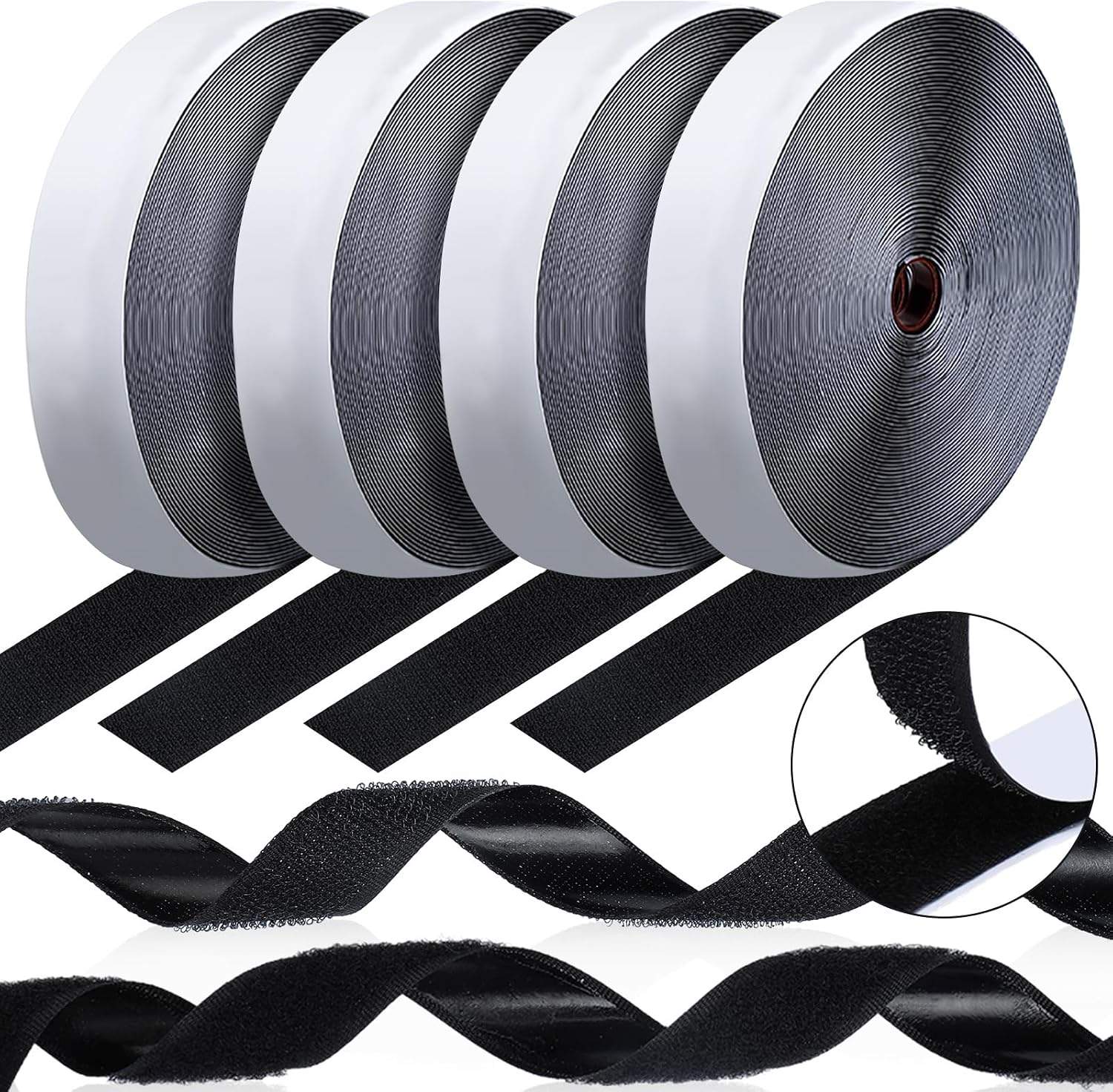
Many everyday fixing jobs sit in an awkward middle ground. The item needs to stay in place, but it also needs to be removed from time to time. Permanent glue is too final, while ordinary tape may not be designed for repeated opening and closing.
Reusable hook-and-loop fastening fills that gap for many lightweight uses.
Homeware that needs to move
Small organisers, remotes, lightweight fabric pieces and cable accessories are examples of items that may benefit from a defined mounting position without being permanently attached.
The goal is convenience. The item has a place to return to, but it can still be detached when someone needs to use or clean it.
Displays are naturally changeable
Notice boards, seasonal decorations and information cards are rarely permanent. Building the display around a reusable fastening system makes future changes easier.
A self-adhesive hook and loop roll can be cut to different lengths for suitable lightweight projects, while smaller fastening pieces may be more appropriate for cards and labels.
Organisation systems should evolve
Storage is rarely static. A family changes routines, an office introduces new equipment, or a hobby space takes on a different project. Reusable labels and mounting points allow the system to evolve rather than forcing people to work around old permanent fittings.
Specialist online stores such as hooknloop.com.au focus on these fastening formats for home, trade, education and display use, giving customers options beyond the small general-purpose packs usually found in a supermarket or hardware aisle.
Preparation still matters
Self-adhesive fastening needs good contact with the substrate. A surface should be clean, dry and suitable for adhesive. Dusty, loose, rough or delicate finishes may need another solution.
Heavy objects also require a different approach. Reusable adhesive fastening is not a structural fixing and should not be used where failure could damage property or cause injury.
Use permanence only where it is needed
A useful DIY question is not simply ‘How can I attach this?’ but ‘Will I want to remove this later?’ If the answer is yes, designing for removal from the start can save effort in the future.
For the right lightweight application, reusable fastening makes that future change part of the design rather than a repair job.